
While most app developers burn through advertising budgets chasing downloads, one AI-powered creator tool quietly generated $50,000 in revenue using nothing but TikTok slideshows. Go Viral: AI Creator Assistant, launched just three months ago by Solveware UG, has cracked the code on organic app marketing through a deceptively simple strategy that costs virtually nothing to execute.
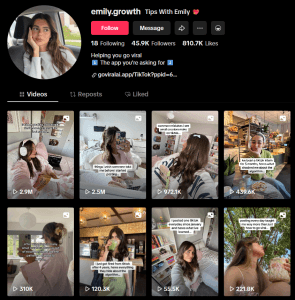
The app's premise is straightforward: creators upload their TikTok, Instagram Reels, or YouTube Shorts content, and AI analyzes engagement factors to predict performance and provide optimization tips. But it's their marketing approach that deserves attention. Instead of pursuing expensive influencer partnerships or user-generated content campaigns, Go Viral's team posts 5-10 slideshow videos daily on TikTok, each featuring before-and-after screenshots of the app's predictions alongside trending audio.
The strategy's effectiveness lies in its authenticity and volume. Each slideshow demonstrates real app functionality—showing a creator's video, the AI's view prediction, and actual results. This creates immediate credibility while addressing the core pain point of content creators: uncertainty about what will perform. The format requires minimal production resources yet generates consistent engagement by leveraging TikTok's algorithm preference for educational content.
TikTok users can find dozens of these videos by searching 'GoViral app' on the platform. Creator @Mario Devconsejos posted a slideshow asking '¿Has probado la app de Go Viral?' with hashtags targeting Spanish-speaking content creators. Another video from @Blow Up App demonstrates the app interface with text overlay reading 'Try it now for free,' accumulating engagement through hashtags like #goviralapptutorial and #creatorsearchinsights.
The slideshow approach works because it solves TikTok's discovery problem for utility apps. Unlike entertainment or social apps that can rely on viral moments, productivity tools typically struggle with organic reach. Go Viral's slideshows function as native advertisements disguised as educational content—they teach viewers about viral content principles while simultaneously demonstrating the product's value proposition.
The timing of Go Viral's launch coincided with increased creator economy anxiety. As platform algorithms become more unpredictable and competition intensifies, creators desperately seek any edge in content performance. An AI tool promising to decode virality addresses this psychological need, making the premium subscription model viable despite the crowded creator tools market.
What makes this strategy particularly noteworthy is its scalability and cost efficiency. Traditional app marketing requires significant ad spend across multiple platforms, often yielding inconsistent results. Go Viral's approach demands only content creation time and strategic hashtag research. The 5-10 daily posts create omnipresence without overwhelming production demands, while trending audio ensures algorithmic visibility.
For app developers and marketers, Go Viral's success offers three actionable insights: First, demonstrate your product's value through real use cases rather than abstract promises. Second, leverage platform-specific content formats—TikTok slideshows, Instagram carousels, LinkedIn articles—to achieve organic reach. Finally, maintain consistent posting schedules to build algorithmic momentum rather than relying on sporadic viral moments. The $50,000 revenue figure proves that strategic organic marketing can compete with paid acquisition, especially for products that solve genuine creator pain points.